Tuesday, 30 July 2024

A visual first six months of 2024.....

January is the time for Creative and Talented lessons.....


February means Knitting


....... and Horticulture


March means Technology

 ...and Woodwork


April is time for our grade 7 pupils to read to grade 1 pupils


May is a celebration of the Elmer Books by David McKee

June means one-to-one devices, Chrome Books, robotics and coding.....


Friday, 15 March 2024

We are 75 years old!


As the longest serving principal of the school, I took on the job of writing the full school history. It has taken me about ten years so far as delved into PTA records, financial statements, minutes of School Committee meetings and the like. Previous principals have been very like me as I found very good record keeping – even the Attendance records of all children since 1948! I can’t share the full history in this magazine, or even the highlights of each year but I would like to give a ‘summary’ of 75 years of excellence.
Before 1948: As the first Garden City in South Africa, the suburb of Pinelands was created in a pine forest from 1921. Pinelands Primary School was founded in 1931 as the first school in the suburb.
1948: Our school was founded as a whites only bilingual school in the northern end of Pinelands mainly for soldiers returning from the Second World War. Originally called Pinelands Primary Number 2, the first official principal was J H G Mckenzie, started with five female staff members and ninety-four pupils: sixty-three English and thirty-one Afrikaans.
Pieter-Dirk Uys was one of the first pupils and his mom and dad wrote the school song and the music!
1950: Four classrooms were added to the seven existing, ones, and a tennis court added in 1951. Four hundred and thirty pupils attended the school by then.
1956: All the Afrikaans children left the school to create Laerskool Oude Molen, on the grounds currently inhabited by Vista Nova High School.
1966: Pinehurst Primary was created, under the name of Extension 6 School!  
1968 – 1973: Henward Honiball was principal and during his time the library was built and then extended. Cape Town was experiencing a drought and the field took strain because hoses weren’t allowed! School fees were R1,50 per term!
1974 – 1976: Selwyn Hall was appointed principal and the first school magazine was written. The school pool, extensions to the playground and off-street parking were built. Selwyn was a keen sportsman and the sports at the school took off; some were netball, rugby, cricket, swimming, tennis, tennisette and athletics. He was also good at promoting the cultural aspects of school and the first play was performed and music, choir, drama and poetry teams were entered into local Eisteddfods. Several pupils from this era went on to perform at national level in cricket, gymnastics, swimming, tennis and hockey!
1977 – 1996: Bob Shepherd continued the excellent work from before. Most of the sport teams were still unbeatable, the finances of the school were healthy and the school building was revamped. Soccer was introduced as a sport in 1988. The cultural side of the school took off, with many children involved in music, speech and drama, ballet and chess. Pupil numbers were down though, with only an average of two hundred and fifty pupils per year. School fees in 1983 were R12 per family per term! Aftercare was started in 1987 because the economic downtown now required moms to work too!
PNPS joined other previously white schools to extend enrolment to all races in 1990 which added numbers to the pupil population. Three hundred and sixty-four pupils were enrolled in 1992 and school fees were R720 per pupil. isiXhosa lessons were started that year too! Water restrictions again affected the school field in 1994. In the final two years of his principalship, education was in the doldrums, with many teachers ready to leave education. This resulted in a mass exodus of teachers all around the country in 1996, and included about five staff from PNPS, including Bob, the deputy and HOD of the Foundation Phase in December 1996.
1997 – 2023: I took over in 1997 with seventeen white class teachers, three white music teachers, three white aftercare staff, one and a half white admin staff and the only staff of colour were in cleaning and maintenance! Four hundred and twenty-five pupils were enrolled, with most of them white. Teacher aides were introduced in 1998 and also that year the first teacher of colour, Rose-Anne Lawrence, was appointed! 

Now in 2024 the school has about seventy staff with more than fifty percent staff of colour! The school has continued to flourish academically, introducing new subjects like computers, technology, woodwork, needlework, coding and robotics, horticulture and creative and talented. The learning support department grew from one teacher who came two mornings a week, to a full complement of about ten staff, providing alternate and individual learning opportunities to all pupils. The uniform was changed in 2003 to create a more South African informal, gender-neutral uniform. 
I also introduced animal ‘husbandry’, safe places around the school, started a Reggio Emilia inspired preschool, created a healthy tuckshop, the Snax CafĂ©, and changed the ‘discipline’ strategy to narrative therapy and restorative practices. Technology was introduced and welcomed everywhere - from a computer room with stand-alone PCs to one-to-one devices, tablets, laptops and banks of Chrome books.
One of the biggest achievements during this time was leading the school during Covid! Although it was like steering a ship without a compass or rudder, the result for our school has been positive! The school management had to look at everything we did, and the way we did it, and this resulted in a far superior offering in curriculum, timetable, sports offerings, use of space, use of staff and traffic flow.
The school has also achieved many awards between 1997 and 2024; these are a few……
a Proudly South African Award in 2003, 
Overcoming Adversity in 2022, 
academic awards in Language and Mathematics over the years, 
five pupils in the top ten in the country’s Horizon Maths competition in 2013, 
the National Science Olympiad for primary pupils in 2012, 
five pupils in the top fifty of the ABSA art competition, 
Astronomical National Award, for primary schools, 
in 2013, the Western Cape Inclusive Education recognition award, 
a second in the Metro Central Maths Competition in 2013 and several firsts in 2015, 
joint second in the Living Maths Olympiad, 
ASHOKA Changemaker School accreditation in 2015, 
a silver medal at the Cape Town Eskom Science Expo, 
won the Wonder League Robotics international competition in 2017, 
several medals at the Royal Philatelic Society’s annual competitions, 
several provincial, national and international chess players, athletes, judokas, gymnasts, cricket 
        and hockey players 
seven of our children spoke in the Parliamentary Chambers in 2012! 
As I will retire at the end of this year, I have written the history of the school to ensure that all this is not lost. My thanks to all those, who, over the years have contributed their thoughts, experiences and factual information to this ‘epistle’, and I encourage those who still wish to do so, to email thaakirahfritz@pnps.co.za.

Monday, 16 October 2023

One year to go!


This year has been quite a personal journey for me. Although I have known for years that public servants have to retire when sixty-five, I have only realised how close this is this year. To help me process this ‘divorce’ from my ‘baby’ I have started to redecorate the ‘principal’s office’ and start moving my personal items back home. Luckily Shereen and I have Elmer’s Space to operate from this has made the move slightly easier. A new carpet, new furniture and a warmer colour has now made this space a lovely meeting room for all to share until the new principal takes over in January 2025.

The other part of the personal journey is finding the right person to continue our journey. PNPS is a very special place; the primary school I wished that I attended in my youth so choosing a successor is difficult. The post was advertised early in September and is currently being processed by the education department and the Governing Body. The plan is to have someone appointed in January 2024 for January 2025 so the current Governing Body and Management Team can work closely with the appointee to ensure a smooth takeover.

After twenty-eight years of my life focusing on one school community, and building the school of your dreams, how do you release this mission and pass it on to someone? That I haven’t dealt with yet, and luckily I still have a year to come to terms with that. In the meantime, I urge you to support all the processes happening currently and the new person who is appointed as the right people will be choosing the right person on your behalf: the worst possible thing for me would be to hear the school community withdrawing their support. The school is only as strong as you, your children and the faith you have in the school. After twenty-eight years of building that, my wish is that the school would continue to flourish, grow, innovate and diversify even more, and continue to be a WCED flagship school on which ‘other school’s model themselves’ as we say in our Vision statement.


Thursday, 11 May 2023

Safe places at Pinelands North


Over the years the school has adapted itself from a school we as adults attended, to one that cares about individuals within the whole. Not all children are happy to play outside at breaktime or learn in a room with another thirty children. Realising this has made us create spaces for children to ‘be’ when the world is too overwhelming.

One of the first spaces created was a quiet games space outside my office. We had noticed that some children couldn’t understand the team games at break and would often get into skirmishes with their peers. We regularly place logic games, puzzles, colouring equipment and gender-neutral toys like dolls’ houses and car garages on these tables and we find that pairs of children, even between grades, end up playing quietly in the passage during break and before school. Also, before school the library is open from 7:00. Children arrive at school and race to the library to play board games, complete puzzles or find a little hidden comfortable spot to read on their own. The library is also open until 16:00 in the afternoon and families use this space to read or work together too.


When we first introduced animals as ‘therapy animals’, we used Beck se Plek, named after Buzzy Beck, a former deputy of the school until 1996. In this enclosed outside quad, bunnies, guinea pigs, chickens and ducks live happily together and provide a welcome respite to children during breaktimes. Every single break, children from mainly grade 1 to 3, find an animal to cuddle and feed until the bell rings for class time again. Grade 3 pupils who have consistently assisted with the animals are appointed ‘bunny monitors’, and they wear this name with great pride! 

In 2017 the theme of our year was “Pushing Boulders”, named after the book by the same name by Athol Williams. Athol was, at that stage, an uncle of children at the school and is still a famous poet and author. During that year we focused on grit and determination with the children and gave them some strategies to use when confronted with difficult parts of their lives. This space is still used as a quiet space: there is a large chess set to play with and children sit around in quiet groups during breaks, away from the hustle and bustle of the other playgrounds. 

Another quiet ‘playground’ is the Mandela Peace Garden. This little quiet garden connected to aftercare, was created by Aunty Suzi, the previous head of aftercare, and a few aftercarians who wanted a calm space to be in the afternoons. They planted indigenous cuttings and collected artifacts such as bird cages, tea pots and fairies to decorate the space.

Learning support has always been a safe place to be: inside the room there are always adults to help children debrief and in the passage there are more games to keep unhappy children busy. A place which was never a safe place for us adults when we were at school, was the staffroom – I remember we weren’t even allowed to walk past that section of the passage! At PNPS children are welcomed into the space: as individuals, as groups to teach and as places to meet. The veranda alongside the staff room is often used as an extra classroom for small groups of children. 

This year the staff created Elmer’s Space. Situated in one of the classrooms with two doors permanently open, this space has been decorated with a huge wooden Elmer, created for one of our previous school plays, and two smaller patchwork Elmers, created by the Wyatt family. Shereen Stadler, the deputy, Thaakirah Fritz, our media intern, and I are now based in this space, waiting for staff and children to join us. Sometimes we are joined by children and staff needing support and sometimes children are sent to us for a debrief if their day is not going well. Sometimes this is just a good quiet place to sit when your classroom is too rowdy or a place to quietly recover from a bout of crying. Baloo, my Indian Ringneck parrot, is also based there and he entertains all who go by. Accessibility is the key to this space: the furniture is arranged to make it look inviting and the staff are based on the outside of a horseshoe, which makes the visitors feel included.

For many children at school in South Africa, school is not a safe place to be, but here in the little suburb of Pinelands, all children have many to choose from – a school I wished to attend when I was small!


Friday, 31 March 2023

Can school be fun?

 The role of fun at school is crucial for creating a positive and engaging learning environment. When pupils enjoy coming to school, they are more likely to be motivated to learn, participate in class activities and develop positive relationships with teachers and peers.

Here are some ways that fun can be incorporated into the school day:

1. Laughter: 

Laughter is a great way to relieve stress and promote a positive atmosphere in the classroom. Teachers can incorporate humour into their lessons or use funny videos or jokes to break up the monotony of the day.


2. Links between teachers and pupils: 

Creating a personal connection between teachers and pupils can help to build trust and respect. Teachers can share personal stories or interests with their pupils to help them see them as real people, not just authority figures.

3. Seeing staff as human: 

Teachers can also show their human side by sharing their own struggles or challenges. This can help pupils to see that everyone has difficulties and that it's okay to ask for help when needed.

4. Lightening the day: 

Taking a break from academic work can help to refresh pupils and give them a mental break. Teachers can incorporate fun activities or games into the day to help pupils relax and recharge. Walking around the field quickly or doing cartwheels on the playground between lessons creates a little excitement to assist those who find it hard to sit still in the classroom as well as creating a lighter moment in the day for all.

5. Stress relievers: 

Schools can also provide stress relievers such as mindfulness exercises or relaxation techniques to help pupils manage stress and anxiety. At Pinelands North there are several spaces for children to relieve stress: the Mandela Peace Garden, Elmer’s Space, Quiet Quad, Beck se Plek, learning support and outside the principal’s office.

6. Conversation starters: 

Fun activities can also be used as conversation starters, encouraging pupils to share their thoughts and ideas with each other. This can help to build relationships and create a sense of community in the classroom.

7. Making school memorable: 

Fun activities can help to create positive memories of school, which can have a lasting impact on pupils' attitudes towards learning and education. Children won’t remember the tests they do but they will remember School in Action days, Readers are Leaders, Hooked on Books and Derby Days.


To incorporate fun into the school day, teachers and staff can brainstorm ideas for activities or games that align with their curriculum and pupil interests. They can also survey pupils to find out what activities they enjoy and what they would like to see more of in the classroom. Finally, it's important for teachers and staff to model a positive attitude and a willingness to have fun themselves, as this can create a culture of fun and learning throughout the school. Staff at our school have monthly Fun Days where different grades will decide what the staff will wear on a particular day. Fun days we have had recently are: wear a strange hat, crazy hair day, different shoe or sock day and a touch of bling. This dressing up by adults makes children laugh at the beginning of their day and so their load is lightened for the day. The important thing to remember in creating fun is that it doesn’t have to cost anything to implement – all it requires a little imagination and some good ‘gees’!


Thursday, 23 March 2023

Building Community at Pinelands North

One negative about Covid was that it kept people away from each other. Pinelands North has always encouraged families to be part of the education solution and so Covid broke down the community vibe because we couldn’t interact as partners face to face. This year we have to focus on rebuilding our community and her a few ideas we have used to do this: 

Welcome family members back into the passages and classrooms
While children are being dropped off or collected, staff are available to chat casually to families. Besides our usual parent meetings each grade will have their own ‘school in action’ day this year so that all family members can actually follow their children through a normal day and experience schooling today for themselves. Trust is built when parents understand exactly what goes on in every classroom.
Focus on gratitude
We thank our parents, the staff and children for playing their part in our big picture, even if not everybody is playing a big part. Showing gratitude for small things makes others want to please the organization more and then more people will want to play a positive role to the benefit of everybody.
Invest in the people of the community
We look out for opportunities to coach, share or workshop with parents, grandparents, pupils and their caregivers, interns, volunteers and staff. Every learning opportunity gives someone else a skill that they can use in furthering their learning in their own lives. This year we have employed thirteen Presidential Interns too: these are young unemployed youth are now assisting with art, sport and music classes, facilitating children with special needs and providing another set of eyes in classrooms.
Encourage pupil voices
The best way to ‘know’ what is really going on behind the scenes is to ask children informally. Good adult and child relationships in a school allow children to voice opinions about staff, about safe and unsafe places at school and about their own home realities. We have staff specially trained and available to ‘listen actively’ and to act upon the advice or information given.
Have fun, play and laugh at school
Laughter changes vibes. School should be to create opportunities to laugh, play and make schooling fun. Our staff regularly hold fun days when they might wear two different shoes to school, encourage children and staff to wear pyjamas or wear their clothes backwards. Just tiny things like this lighten the load of life and create smiles in classrooms as school starts.
Daily shout outs
Why not catch people in the act of doing the right thing instead of the wrong? Our staff and children to look at the world through new lenses and encourage kindness, generosity and good habits by announcing what they witness over the intercom during the day.
Shared conflict resolution language
Our school uses several ways of dealing with conflict, with families as well as the children. By sharing the language used at school to resolve conflict with our families, we encourage them to also resolve conflict at home in a similar way. If parents need to be informed of some school conflict, they will  then understand the process used too. One great way of resolving conflict is to use narrative therapy; our school tries to change people’s stories, about themselves and about others, through this process.
Acts of kindness
Encourage acts of kindness; between people at school and those at home. Remembering a birthday, calling when you hear a family pet has died or just checking in because you thought of someone are all kind acts which show you care about the people in your community. We try to follow up regularly with our families – short emails or Whatsapp or voice notes let our families know we are thinking of them in difficult times.
Pay it forward
A great project for the whole family is to work out who is in need around them and ask them then to ‘pay it forward’. Simple ideas like buying a pair of shoes for someone in need, offering to babysit a colicky baby or the neighbours’ dog are some ideas families have used to bring happiness to others and therefore also to themselves. We have used this idea as a holiday project for our families and it worked so well – each child was given a tin to fill with coins and then the money inside was used to ‘pay it forward’.
None of the above ideas cost money: they just take time and a little extra effort on behalf of all members of the school community. When a school community is happy, feels welcomed and safe, then the children in the school benefit hugely!

Friday, 18 November 2022

Our Inclusive Journey is Acknowledged Worldwide!

 What an exciting but exhausting year 2022 has been so far! Early in March we were invited to enter a competition: Do you think your school is world class? Five categories were offered, and we decided to enter them all as we truly believe we are world class! That decision resulted in five people spending five full days writing why PNPS is world class in Overcoming Adversity, Innovation, Sustaining Healthy Lives, Environmental Action and in Community Collaboration. 


We received great news in May but were sworn to confidentiality until 9 June when the whole world would receive a press release, announcing that Pinelands North was one of ten finalists in Overcoming Adversity! Every finalist was asked to arrange an event in their country on 9 June so that the announcement could be made public knowledge.

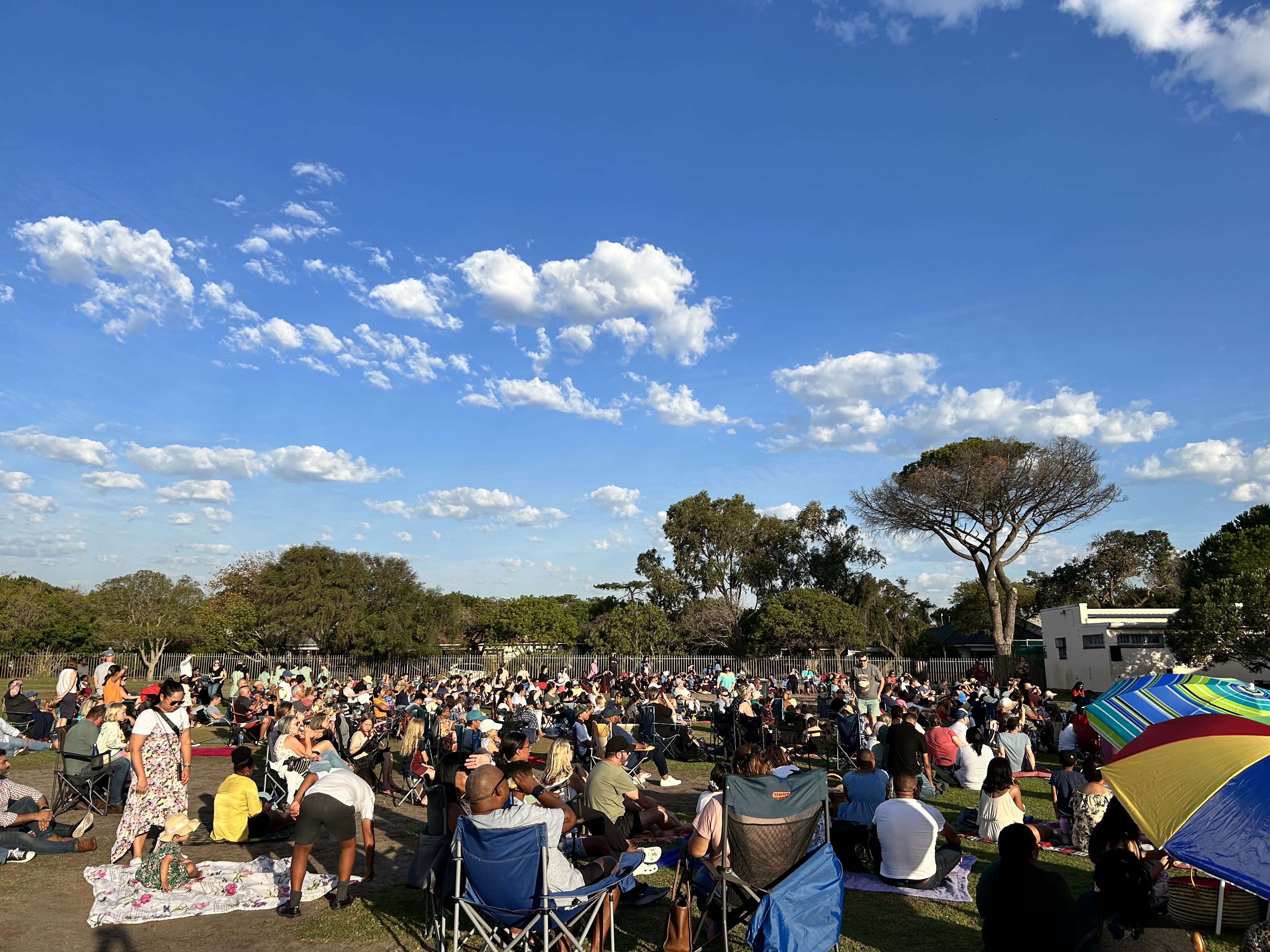
Do you know how difficult it is to get well-known personalities, the entire school community, the press, social media and education department officials to an event without being able to tell them why they should attend?  Luckily, we had already invited our school community to some ‘gees’ creating events earlier in the term and so we tagged the idea to that and Youth Day, which in South Africa falls on 16 June, the following week. Overcoming Adversity fits in perfectly with Youth Day! Guests were told that they needed to be on the field between 10:00 and 12:00, wearing colours of the rainbow and to believe that the visit would be worth their while! Our families were asked to bring their children to school for only those two hours that day – and nobody complained!

Tents were erected around the field for each grade to offer the school community an activity - like face painting, flag making, games, doughnut decorating and an opportunity to create mindful bookmarks. Red carpets were laid out, food trucks offered refreshments, a shuttle service offered families to chance to ‘park and ride’ and the marimba team entertained us with foot stomping music! Photographers were quick to capture every beautiful moment! 

When guests arrived, they were ushered to the astro on the field where a social cafĂ© atmosphere allowed them to meet and greet, enjoy coffee in their own ‘take home’ souvenir mug or go and enjoy the festivities in the tents.

Premier Alan Winde arrived just before 11:00 when the more formal ceremony was to commence. The choir entertained the school and then Joanne Peers, the Community Support Co-ordinator and parent, set the scene by linking the history of the struggle on Youth Day, with how our school has worked on helping the community overcome adversity over the past while.

One thousand people on the field still didn’t really know why they were there until Premier Alan Winde announced that the school was one of ten finalists in the world, and one of only two in South Africa! The crowd went wild: with South African flags waving, the entire community stood up and sang the National Anthem. What a moving moment for all present!

After the announcement, the school and the education department were allowed to share the information far and wide. Public relations experts, photographers, radio station hosts and the press, and social media influencers were all rallied to tell the story of the school as widely as possible.

The top three schools in each category were announced in June and Pinelands North made the cut! This resulted in T4 Education creating a video of our school journey and us receiving loads of media attention from the world.

The next big event was World Education Week, held online in October. This event showcased the 50 top schools around the world in a one-week extravaganza! Pinelands North was given a one-hour slot on 18 October to tell the world about what we were doing, to enable other schools around the world to follow our lead. 

The following day the winners in each category were announced: Project Shelter Wakadogo in Uganda won our category as their teachers spent 36 000 hours teaching their students in their own homes during Covid!

We are thrilled we entered the competition as it gave us an opportunity to re-evaluate what we do daily within our school community, and to appreciate the journey we have been on through the recent past. 


Sunday, 13 February 2022

The Benefits of Schooling for a Great Future


The benefits of face-to-face schooling

During the holidays I pondered the decision of some families over the past two years to home-school their children. I thought through my perceived benefits of being within a diverse, enlightened school community. Here are my thoughts on the benefits of good schooling for all future adults!

Our social behaviour is moulded by the people around us. We learn how to watch others for non-verbal cues as well as listen to them to understand their opinion. We learn to make friends and to gently release them when the time is right. Working in groups, particularly with people you don’t like, is difficult but being at school requires us to learn how to do this. School helps us to learn how to succeed and fail, and our schooling teaches us that if we persist through failure, we still can succeed!

Some things at school are out of our control and so we need confidence to face challenges – not everything can be controlled just because we wish it were so! Schools bring together families with diverse backgrounds and this could create a ‘culture clash’. Living and learning at home amongst people you know means little opportunity to learn empathy and understanding of difference. Co-operative learning benefits everyone, especially when those participating are very different. 

If we learn good communication skills like networking, negotiation, mediation and public speaking before we leave school, we become exceptionally valuable future employees. Good writing skills and critical thinking are often part of our school assignments, with paying attention to the detail and handing the project in on time being awarded success. Another business skill we learn while at school is how to utilise resources that are available, often through recycling or reusing items, and this means that we make good decisions about how to treat resources responsibly. Decision making is another skill learnt at school: the consequences of good and bad decisions, by ourselves and others, are very evident. Ethical behaviours are also learnt through mentorship and watching the community interact positively.   

The hobbies we have as adults are often learnt at school too. Some schools like ours still include embroidery, sewing, woodwork and growing plants in their daily curriculum so children are introduced to lots of activities which can become life-long hobbies.  Good reading skills and access to great reading material usually means we become ‘hobby’ readers as adults too. Sporting activities and being active throughout life usually starts at school if this is a positive experience. 

Good schools teach us to love learning! Learning through play, through experimentation and through practice help us to continue to be life-long learners.

Nowhere in this article have I mentioned school subjects! Anyone can learn anything online these days but the skills one learns through interaction within a community are the valuable ones can take us into adulthood. Viva schooling!


Monday, 31 January 2022

Who said Covid means less learning at school?

 Pinelands North Primary School spent the last two weeks of last year celebrating their children’s achievements at individual grade award ceremonies. To better social distance every grade chose a theme, a venue and the ‘uniform’ for the day. One family member of each child was asked to join them for an hour during the day, to celebrate 2021. This meant that some grades wore fancy hats and met their parents around the swimming pool and others chose a slightly more formal occasion in full uniform and in the hall.

Besides these celebrations, the Red School children have exceeded expectations in so many other ways this year. Three Foundation Phase pupils; Benjamin Whyatt, Benjamin Draper and Jaime Barendse came first in Grade 1, second in grade 3 and third in grade 3 in South Africa in the Living Maths Competition! This mathematics ‘talent’ contest is written by hundreds of thousands of children all around South Africa annually.

Children at the Red School also learn ‘alternative’ skills: Grade 4 and 5 pupils learnt how to knit and then knitted at least one square which was added to create knee blankets for the elderly. In Woodwork, pupils created cup holders, blackboards, picture frames  and bird feeders by using their skills of sanding, cutting, polishing and varnishing. In grade 7 Technology the pupils created indoor thinking and logic games to entertain younger pupils on rainy days.

Last year, every child created art in a variety of creative spaces; from the classroom to the art room, the school hall and outside. Each child created an art portfolio filled with all the incredible art they made. We had parent volunteers assist us in the Foundation Phase, as well as teachers across the grades, adding their own creative flair to the subject. 

Despite restrictions, our Music Department participated in the Cape Town Eisteddfod and received very good results and continued making music together in a small ensemble. Some students did their Trinity exams and were rewarded with results such as high merits and diplomas. Each student even got to perform in a virtual concert, celebrating the musician in themselves!

Some Creative and Talented pupils followed a Rock Solid theme and created gardens using rocks, and others made a picture book to share with younger pupils. Grade 6 pupils spent their Life Skills lessons learning skills for life: how to change a tyre, how to identify plants and create a garden, and how to tie a tie! In Grade 2 pupils learnt baking skills, while learning about measurement: they learnt to double a recipe and make recipe cards to take home to also spoil their families. For some this year has been the year of learning how to care for animals:  grade 2, 3 and 4 pupils were trained in how to care for guinea pigs, chickens, ducks and rabbits and then daily cared for them, fed them and loved them.

The sports programme grew and diversified during Covid too. All our pupils attended compulsory sport programmes as part of the school day. This programme included a variety of activities that helped improve the mental and physical development of each child. Children could also volunteer to participate in sports’ clinics after school and on Saturdays. If anything, our pupils learnt more last year than they had previously because they had more options, more opportunities and most of all had more fun at sport. This year our pupils will again have a chance to test their sporting skills, as we work towards building a fun but competitive spirit  as we get ready to compete against other schools. 

Pupils in Red Roots demonstrated their love of inquiry and learning through play throughout the year. On 'Fun Fridays' they learnt three languages: Sign Language, isiXhosa and Afrikaans; using songs, actions and rhymes, as well as learning how to bake and make delicious treats from around the world. They learnt how to grow their own plants from vegetable offcuts and planted them in the veggie garden. A highlight again was the interaction with the animals: even those who were very nervous learnt how to interact, care for and play with Tobin, the dog, and our two tortoises, Ncothoza and Rimples. 

Covid has created opportunities to learn differently and has added a richness to our learning. Besides all these obvious learnings, most children have learnt how to be resilient, to be positive in the face of negativity and how to maintain ‘grit’. If we as adults had learnt these skills at school, wouldn’t we have had a richer and fuller life now?


Sunday, 20 June 2021

The Giving Tree

 The most exciting and fulfilling part of my week is when I get to teach in the Creative and Talented Programme. We started this programme for very bright children who struggle to remain in the classroom fulltime because their attention wanders, they need more stimulation, and they need to be supported emotionally in a world they don’t gel with easily. 
 

I teach twelve- and thirteen-year-old children and currently we are dealing with social and emotional issues related to teams, being alone, loneliness and leadership.  This week’s topic was ‘are we always responsible for our actions’ and ‘what do we do when we regret our actions later ‘.

To introduce the topic, I used The Giving Tree by Shel Silverstein, a line drawn picture book with a powerful message. We often introduce our topics through Philosophy with Children, an education method used all over the world. The story involves a ’boy’ who loves a tree. She, the tree, loves him back and when he is young, they spend lots of time together. As he gets older, they spend less time and when he is with her, he is sad. He tells her he needs money and so she gives him her apples to sell. He comes back when he is older and needs a home for his family, so she gives him her branches. When he is older still and needs a boat, she gives him her trunk. The book ends with him sitting on her stump looking sad.


After discussing with my children about whether the boy was right or wrong, and did he know whether he was right or wrong, I asked the children to think back to similar situation for themselves. Had this happened to them or a family member? After some time in serious thought, I asked them to each tell a story, in third person, about a similar situation.

Third person is ideal for this type of personal story telling because it allows children to confide in others without blame because officially it ‘isn’t them’ in the story.


Wow did we tear up as child after child revealed a sad incident from their past, or from their family history. Most of the stories revolved around precious toys or pets who were abandoned as the child got older, but some were so poignant. Here are some of them:


A new nanny started to work at a family house and she was a very good worker. After tidying and cleaning the whole house, she unpacked the children’s cupboards. There were many grubby old toys slung into the back of a cupboard, and so she threw them away, knowing that the children of the house had many new shiny things to play with now. One of the toys thrown away was a dirty rag rabbit that had been loved by the daughter of the house since she was two. This rabbit had been given to her by her granny who had since died. The daughter of the house never saw that rabbit again. 

Once there was a boy who was interested in geckos, so he caught one and kept it in a box. Every day he caught insects for the gecko to eat, he chatted to eat when he returned from school, and he even taught the gecko to play with a marble. In the past year the boy found a box in his room and when he opened it, he found a pile of bones and some skin with the marble.

Years ago, there was a young woman at university who played in a girls’ band. Although the band wasn’t famous everybody loved to hear them play together and so they were offered a chance to play overseas. The young woman found out that she was pregnant with a child at that time and her dilemma was should she raise a family or go overseas with her friends in the band. That young lady now has two daughters.


The emotional maturity shown by these beautiful children blew me away last week. I realized again how important it is for me to teach, and how important it is for principals to teach. How else do you as a principal continue to do what drew you into the education sector originally and keeps you firing on all cylinders?

Sunday, 13 June 2021

Using wheelchairs to learn about disability.....


Pinelands North Primary regularly rents wheelchairs to assist our pupils to 'walk in other peoples' shoes'! Every child has an opportunity to spend some of a day in wheelchair, trying to get around and do normal every day things without standing up. For most this is the first time they get to appreciate how disabled people manage daily. After the last opportunity, the grade 6 pupils were asked to answer some questions. These are their answers: 

My first day in a wheelchair was:
exciting, scary, fun, relaxing, lovely, different, challenging, strange, tiring, cool, difficult, frustrating, 

I found: going through the passage with lots of people, moving around outside the classroom, trying to park in a perfect position, maneuvering around, going to the toilet (lots found this challenging), getting through the classroom door, going anywhere, not being able to move my legs, pushing uphill, 

Most challenging but really enjoyed: sitting down for the day, sitting in a soft chair, riding around, watching how people treated me while in the wheelchair, rolling around the playground and passages, getting pushed around by others, experiencing how someone else feels in a wheelchair, going down ramps (lots loved this).

What I learnt from this experience was:  
that I must not take life for granted. You can live a normal life, like anyone else, while in a wheelchair. 
that it is not easy to move around and it took a lot of problem solving.
I need to be thankful for what I have and must never take it for granted.
that it is hard being in a wheelchair.
not to make fun of those around you who are in a wheelchair or are different to you.
we must appreciate our legs.
that people in a wheelchair have a hard time getting around.
I must be thankful for what God has given me.

I now know:
that people in wheelchairs are special, just like us.
how people in wheelchairs manage their daily lives.
that life is much harder for disabled people.
that different people have different struggles.
that it is easier to walk with two legs, than to ride in a wheelchair with none.
I must be thankful for what I have and must take care of myself.
I must respect others in wheelchairs.

Going forward, I will try to:
to help others and to be a good friend to those in a wheelchair.
respect people in wheelchairs, because it is very difficult doing things on your own.
to keep my legs safe.
to treat people equally.
to take care of what I have.

Thursday, 3 June 2021

Ways to challenge gender stereotypes in your home


Before your precious baby is born, people have created a stereotypical picture of your child. Gender Reveal Parties, Baby Showers, gifts from the family and shopping centres identify your child as either a boy or a girl, usually with the accompanying colour range. Some families choose not to follow this stereotypical view and know that gender is actually on a continuum with many possibilities, between ‘he man’ and ‘tinker bell’, with all people falling somewhere inbetween. 

Some schools have started to be far more inclusive of gender difference and are actively challenging these stereotypes in the classrooms daily. Family homes can reinforce or break down this learning, and support for this world view definitely assists children to integrate into the world far better. Here are some tips on breaking down the gender barriers in your home:


Ensure your home reflects that it is okay to be different in the wider sense of the word. Actively seek out role models to interact with as a family, particularly those who are different from you. Families with parents of the same sex, families with only one parent and traditional families can assist children to understand what is ‘normal, even if it doesn’t copy their family.


Challenge stereotypes when you hear them at home amongst your family. Family get togethers are a perfect time to talk about stereotypes, with most adults still being scathing of people who are different to themselves. Enter serious discussions and include your children, even if the topic is heated. Use inclusive language too: ‘moffie’, ‘fag’ and ‘bunny’ are words that children should be told are not acceptable. Reward your children for standing up against discrimination.


Picture books and story books are good ways to introduce difference in gender into your home. Julian is a Mermaid by Jessica Love and The Girl with Two Dads by Mel Elliott are two of the books Pinelands North uses in their Philosophy for Children course. Both of these books challenge stereotypical lifestyles. Challenge stereotypes too by encouraging your children to play with toys that are not conventionally ‘boys’ or ‘girls’ toys: boys love dolls houses and girls love car garages too!


Look at the spaces in your home and ensure they don’t reinforce stereotypes. Dads calling a room the ‘mancave’ and having a pink frilly ‘princess’ bathroom for your daughter instil views that men should have caves and girls should like pink frilly things! The jobs in the house should be shared but not by gender: anyone should be able to iron, wash the car or the dishes, and water the garden.


And finally try to attend conferences and courses on gender differences to ensure you have the correct information. A good place to find information on this topic is through FaceBook – there are several very good sites you can join to find out the most up to date pronouns and research available. Through you, a whole generation of future adults could be far less discriminatory than the adults of today!


Tuesday, 16 March 2021

Top class principals are needed, now more than ever!


Reflecting on the lockdown, and on what has made some schools flourish and others languish, is the quality of the principal. I don’t mean ‘smart’ principals, or ‘wealthy school’ principals or principals with loads of experience…..I mean the best kind of principal! 
Cornerstones of a good principal’s leadership are genuine caring, good guidance counselling for children and staff, internationalism and a shared leadership structure.

A school that succeeds has a principal who dares to share authority and responsibility with parents, staff and pupils. This lockdown has been devastating for some families, including staff, as many have lost their jobs or businesses, and now face financial ruin. Weekly letters from the principal to families, and a daily voice-note to staff, makes a huge difference in how the individuals then face every day. When principals are society influencers and positive role models, the school community is able to follow their positive leadership. 

A good principal allows an efficient use of mental and financial resources and understands that good ideas should not be concealed but be further developed by colleagues at other schools too. The goal of the principal should be to develop the whole education system, not place obstacles in the way of ‘rival’ schools. Although schools can and should be different, collaboration between schools should mean that not every school needs to ‘push every boulder’, but rather learn from those who have already have done so. This collaboration means that schools could focus on different areas and share their findings. Principals should also build collaborative relationships with the surrounding community, so the school becomes a living part of the surrounding society.


Children study for themselves, not for the school, the principal, or their parents. They need to be active citizens in their own schooling. This lockdown has given children the perfect opportunity to do this. Many are now researching things they have never had the opportunity or time to do. Several PNPS children have used the opportunity to ‘Skype a Scientist’ and have learnt things that scientists research, from all parts of the world. The learning during lockdown needs to be carefully curated to provide opportunities for children to address relevant issues in the world, deal with their emotions and develop life skills for the future. Even during lockdown, we are working with those who will change our future and influence the world through their values.


A principal’s attitude to internationality will determine whether the school follows international trends, gets involved internationally or just survives in its community. During the lockdown there have been so many opportunities for principals to research international trends, to predict the future or to make plans. As a country we are lucky to be behind the rest of the world in this pandemic. Schools around the world have succeeded or been disasters, and all we as principals need to do is encourage pioneering teachers to try things they thought previously unacceptable in the teaching arena. Success is at the end of our fingertips!


Wednesday, 11 November 2020

COVID has added more personal touches to Pinelands North


 As I complete twenty-five years as principal at a local primary school in a completely ‘different’ year, I have been reflecting on how hard it has been to hold on to the ethos of a school this year. This comes, by and large, from the way the principal and staff interact with school families, the children and each other. 

Many ‘normal’ social school behaviours have had to stop such as face-to-face parent meetings, new pupil and staff interviews. To create the ‘personal’ touch via Zoom and other online platforms is much more difficult, and so schools have had to be creative about keeping the ‘gees’ alive!

Drop off and collection time has become very important for family connection. Staff have said that they are seeing more of their parents this year, and that the little chats and interactions shared in the mornings and afternoons have definitely made them feel closer to their families.

Some families and children have become much more anxious this year so creating a safe place to support children who arrive and struggle to detach from their families really helps: a toy from home, wearing civvies to school and having their teacher meet them at the car door has definitely made a difference. The classrooms have also become more homely, incorporating blankets, pillows, beanies and soft toys. The animals have also played their part in dampening anxiety: if an anxious child arrives, the staff take the child into the quad with the bunnies and a warm stroke of a compliant white rabbit often makes them forget their unsafe feelings. Restricted movements at breaks and in classroom spaces, have given children more time to get to know their teachers and their peers too.

Sending Whatsapp personal messages out of school hours has also proved a success for children and staff. A ‘thinking of you’ sent on a Sunday can just make the next week seem do-able! FaceBook and Twitter have become much more important because celebrating children’s achievements can still be done this way. Parents like to get a glimpse of what their children’s days look like. It gives them peace of mind knowing that their children are safe and celebrated. Having this insight overcomes fears around social media usage.

Staff have been challenged to create a good vibe for children and each other. Dancing the Jerusalema with children at break time is one example of how this is achieved, making the disappointment of missing out on soccer at break, much more bearable. I am hoping that schools take the learnings from 2020 and add them to their daily operations in the future…. School communities will certainly benefit!


Monday, 12 October 2020

The Role of the Principal in leading a school towards Inclusion


The principal is pivotal in creating and promoting an inclusive culture There are huge social 

 benefits for both ‘regular’ and ‘exceptional’ children in an inclusive classroom.


Where do you begin the process?

Understand inclusive education yourself. 

Find good examples of inclusive schools to visit and ensure you take along the staff ‘influencers

Spend time learning.... on site, on the web, speak to people

Connect effective school practice with inclusive school practice

You can become an inclusive school without adding money to the mix

You need courage to deal with skeptics 

We must be the change we want to see.... Mahatma Gandhi


Focus on change!

Understand the change process

Develop a broad plan of action with as many stakeholders as possible

Realize that not all your staff will 'love' the idea!

Support all efforts to change.... provide time to visit schools, money for attending courses

Accept that you will not have all the answers at first, and that you will always be changing, adapting, progressing

Create a safe space for people to 'risk'

Create a culture that encourages 'learning by doing'

Real change takes a long time!

Create your team!

Find people to support you, the staff and the school

Identify champions of inclusion and invest in their training and growth

Ensure your leadership team feels empowered to assist staff

Include people from the district office as much as possible

Find volunteers to assist staff.... counselling, reading, group work

Involve parents in their children's learning


The path of progress

Solve practical problems, one at a time, with creative ideas.

Encourage experimentation amongst the teachers.

Celebrate all progress, even small steps.

Realize that your goals will keep changing as your school grows.

Keep asking and learning from those further down the path.

Share successes with all stakeholders.

Keep communicating with all in the process.

Trust the children to speed up the progress.

Look at what children can do, not what they can't do!

Replace those teachers who leave with those who believe in inclusion.

Don't lead the process alone, the more people who take up the challenge the better.

Don't follow policy to the letter...change, adapt and develop better policies!

Teach children with exceptionalities yourself to model good practice

Keep evaluating your school practice.

Accept that you won't get it right always and that some children need more help than you can provide.